


Across New South Wales, people working in domestic and family violence services often talk about the same pressure, more people needing help, fewer places to turn, and a system that doesn’t always keep up.
Workplaces are starting to feel that pressure too. Not in statistics or reports, but in small moments. A staff member who’s distracted. Someone who doesn’t want to go home. A situation that doesn’t quite sit right.
At DOOLEYS, the response hasn’t been framed as a program or campaign. It’s been built into the way the organisation runs day to day, what staff know, what’s available to them, and what happens if something unfolds on site.
Training has been one of the first pieces put in place. Every staff member will take part in a 90-minute DFV awareness session with Anglicare, delivered onsite. It’s designed to keep things simple and practical. What to notice. When to step in. When not to. What support looks like without overcomplicating it.
For senior staff, that training goes further. They’ve already completed extended sessions focused on real scenarios, what happens if an incident occurs in the venue, how to respond safely, and how to manage it without drawing unnecessary attention or escalating risk.
Support for staff sits alongside that. There are now clear pathways for anyone experiencing domestic and family violence to access help, including connections to housing, counselling and financial services. An internal information hub has been set up so staff can find that support privately, without needing to ask in front of others.
There are practical measures in place too. “Escape bags” have been introduced, small, ready-to-go packs with essentials for anyone who needs to leave quickly. It’s a simple idea, but one that removes a layer of hesitation in moments where time matters.
Workplace policy has been tightened to support all of this. A formal DFV policy now sets out how disclosures are handled, what support is available, and how situations are managed within the venue. Around the club, information is available where it needs to be, visible enough to find, but not obvious enough to draw attention.
Staff feedback is also part of the process. The approach isn’t fixed. There’s an understanding that what works now may need to shift, and the people using these supports are best placed to shape how they evolve.
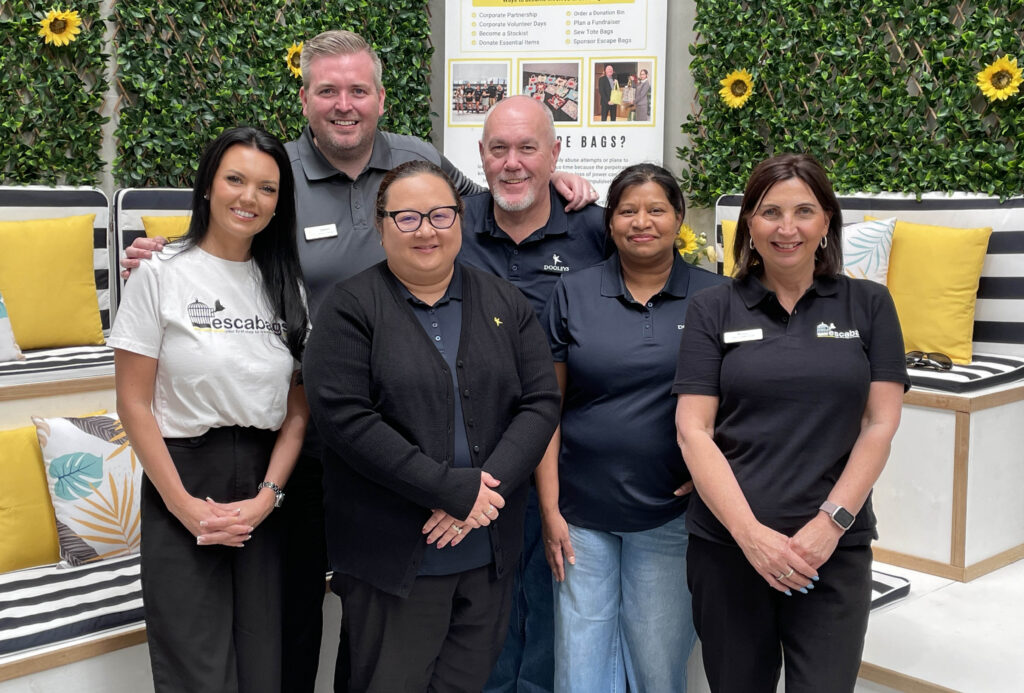
Outside the staff environment, a new initiative is starting to take shape. The Connected Community Partnership brings together Escabags, StandbyU and DV Safe Phone in a single, shared approach. Through co-branded materials across the venue, patrons can access multiple support services from one place.
It means someone doesn’t need to know exactly where to go or who to contact. One point of entry leads to several forms of support, practical assistance, safety tools, and specialist services.
Where it makes sense, those services can also be accessed directly through DOOLEYS locations. It shortens the distance between someone needing help and actually getting it.
None of these measures are designed to solve domestic and family violence. That sits far beyond any one organisation.
What they do is change the response in the moments that matter, when someone is unsure, when something feels off, when support needs to be close, quiet, and immediate.